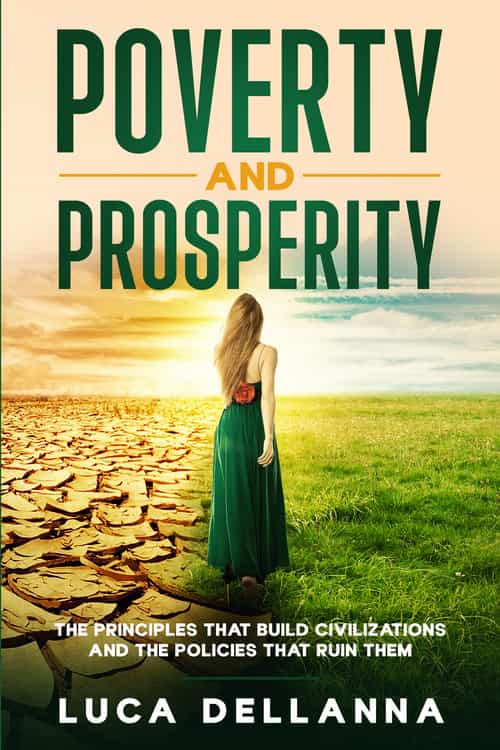
Poverty and Prosperity
The Principles That Build Civilizations and the Policies That Ruin Them
1st edition
or
About the book
Productive societies redistribute prosperity; unproductive ones redistribute poverty.
We live in an age of unprecedented wealth, yet our prosperity hangs by a thread. I watch with concern as politicians erode its foundations while most journalists and voters, who elected them, look away.
That's because we take prosperity for granted. But history teaches that poverty, not prosperity, is the norm. And we are always a few bad decisions away from sliding back into it. Venezuela was once South America’s richest nation; today, it is its poorest.
We have forgotten how we reached our current position and what it takes to sustain it. Instead of celebrating those who create prosperity, we elect those who redistribute it, until only crumbs remain. We optimize the present while neglecting the future.
This book is both a warning and a guide. For wealthy countries, it is a wake-up call: the policy mistakes that can undo decades of progress, and how to spot them before it’s too late. For developing nations, it offers a roadmap to prosperity, showing which strategies work and which do not. Most importantly, it provides everyone with the tools to advocate for better policies, whether at the dinner table or the voting booth. The goal is to help build countries that are wealthier, cleaner, safer, and freer.
You’ll learn:
- The economic and cultural mistakes that turn abundance into scarcity
- How to spot dangerous trends before they reach a breaking point
- Practical principles to make societies wealthier, freer, and more resilient
Clear, concise, and actionable, Poverty and Prosperity equips you to engage in smarter political conversations, advocate for better policies, and help build a future where prosperity lasts.
About the author

Luca Dellanna is the author of more than ten books. He is a researcher in adaptive systems and a management advisor.
Luca has also been teaching risk management and related topics for over ten years at the University of Genoa (as an external lecturer), and frequently gives guest lectures at many public and private institutions.
He has been a speaker at some of the most prestigious conferences and podcasts, such as Nudgestock (the largest behavioral sciences conference) and Econtalk (twice). He has been featured on The Spectator and other famous newspapers.
Luca lives in Turin, Italy, though he also frequently spends time in Singapore.
Part of Luca's portfolio / trusted by leaders at…





Luca is fluent in EN, IT, FR, ES, and has experience in the following industries: agricultural, automotive, banking, chemical, consulting, consumer services, defense, electronics, fast-moving consumer goods, finance, fintech, food, hospitality, logistics, manufacturing, pharmaceutical, professional services, retail, semiconductors, software, and tech.